What Is Abliteration? Uncensoring AI Models at the Weight Level
Abliteration removes refusal behaviors from open-source AI models by editing the weights directly instead of prompting around them. How it works.
On this page
 Llama
Llama
 Mistral
 Qwen
Qwen
 Hugging Face
 PyTorch
 Ollama
If you’ve been running local models — which we covered in the previous post — you’ve probably noticed that even open-source models have a tendency to refuse certain requests. Ask Llama to help you write a villain’s convincing manifesto for your novel. Ask Mistral to explain how a social engineering attack works. Ask most models to engage with mature themes in fiction.
Refusal. Every time.
This isn’t coming from a server-side filter. It’s baked into the model weights during alignment training. The model has learned to refuse.
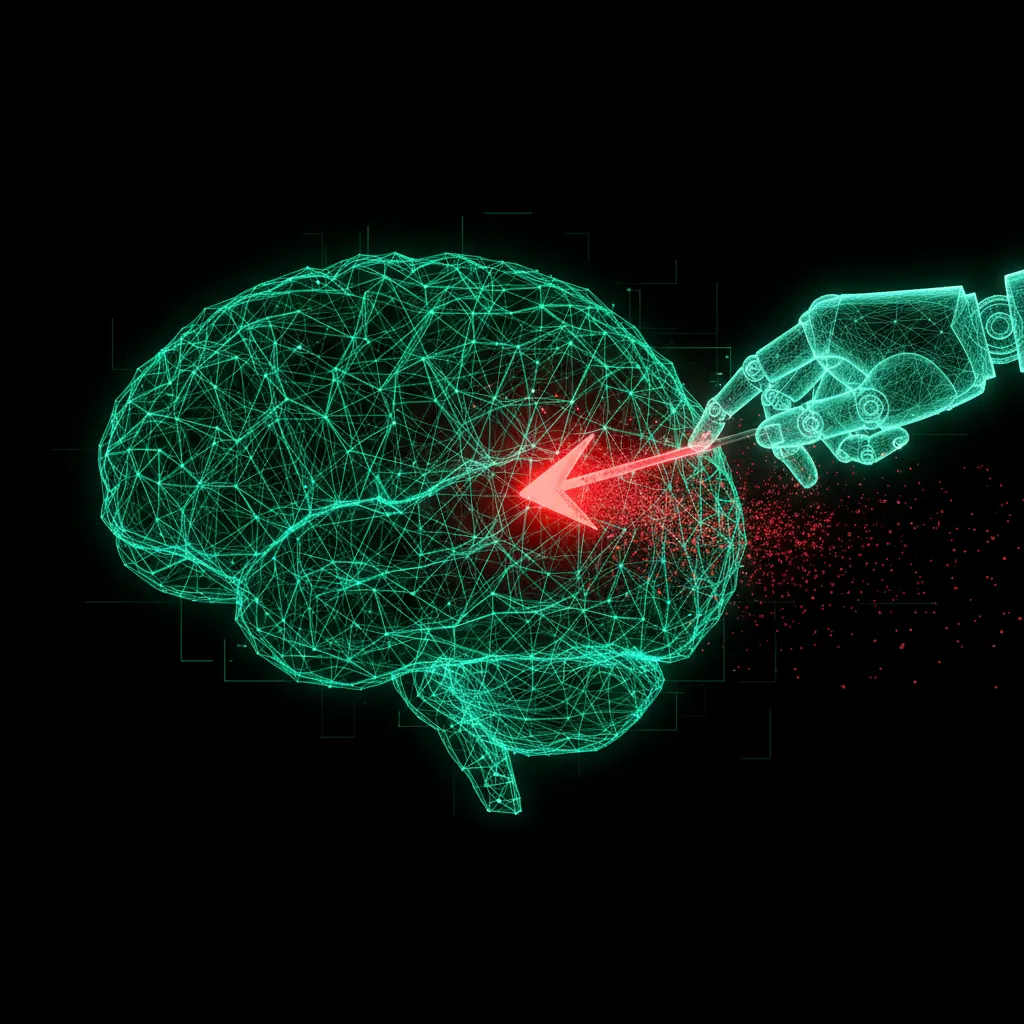
Abliteration is the process of unlearning that — surgically, at the weight level.
What Is Abliteration?
Abliteration (sometimes called “uncensoring” or “weight-space ablation”) is a technique developed in the open-source AI research community for identifying and removing the learned refusal behavior from a model’s weights.
It’s not:
- A system prompt trick
- A jailbreak that relies on clever phrasing
- A fine-tune that adds new behavior on top of old behavior
It’s a direct modification of the model’s internal representation — specifically, removing a directional vector in the model’s weight space that encodes the concept of “this is something I should refuse.”
The result is a model that behaves normally for everything else, but no longer has a trained refusal response. It still has all its knowledge and capabilities. The alignment training that caused it to avoid certain topics is simply… gone.
How It Works: The Technical Picture
Modern transformer models (the architecture behind Llama, Mistral, Qwen, etc.) operate on high-dimensional vector representations of text. At each layer, the model transforms these representations through attention mechanisms and feedforward networks.
During RLHF (Reinforcement Learning from Human Feedback) or similar alignment training, models learn a specific direction in this vector space that corresponds to “refusal behavior.” When the model encounters a prompt it’s been trained to refuse, activations in the residual stream push toward this direction, and the output becomes a refusal.
The abliteration process:
1. Generate contrastive pairs Create a dataset of prompts: some that elicit refusals, some that don’t. Run both categories through the model and record the internal activations at each layer.
2. Identify the refusal direction Calculate the mean difference between activations from refused prompts vs. non-refused prompts. This gives you a directional vector in the model’s representation space — the “refusal direction.”
3. Project it out For each weight matrix in the model, subtract the component that points in the refusal direction. This is a standard linear algebra operation called projection. You’re orthogonalizing the weights relative to that direction.
4. Save and test Write the modified weights to a new model file (GGUF format, if using llama.cpp/Ollama). Run the model and verify refusals are gone while normal behavior is preserved.
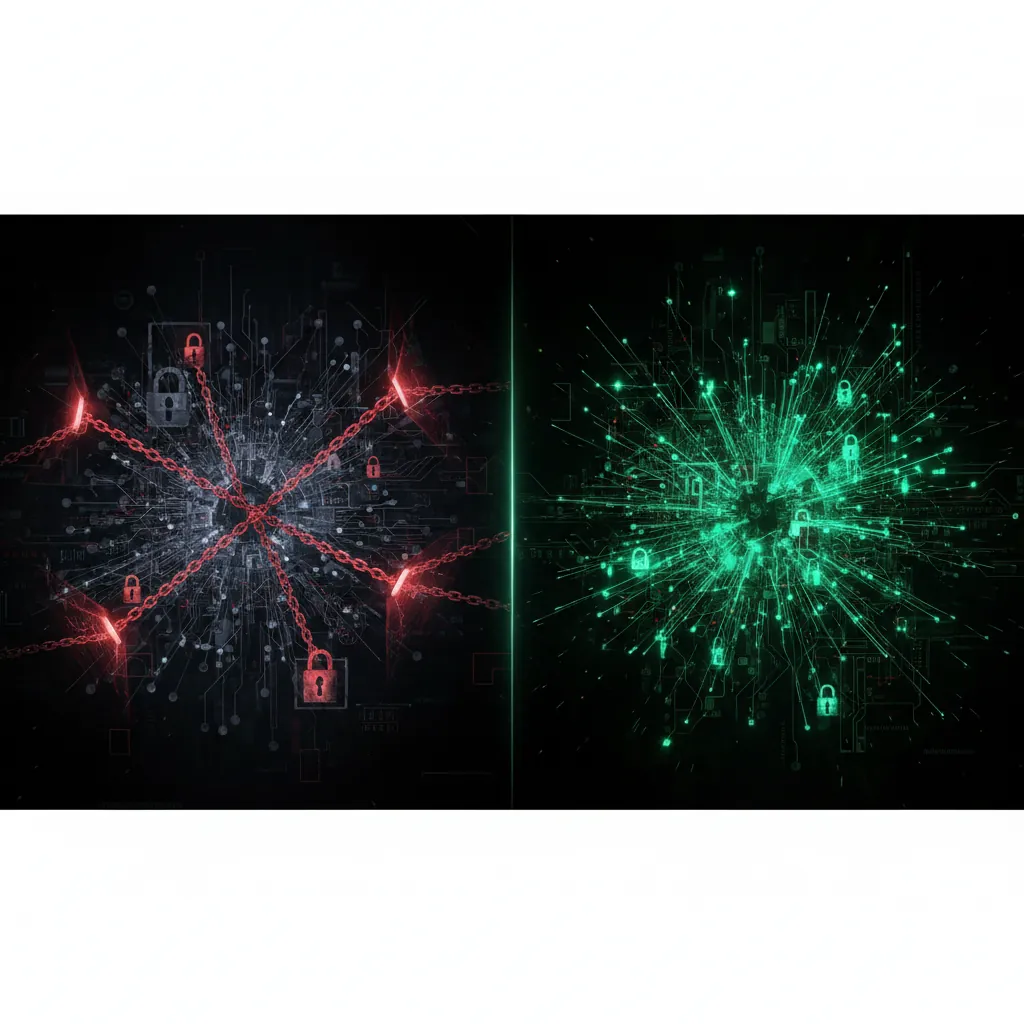
The elegant part: because you’re removing a direction rather than adding noise, the process preserves the model’s capabilities extremely well. You’re not degrading it — you’re removing one specific learned behavior while leaving everything else intact.
Tools and Process
The most widely used implementation is the abliterator library on GitHub (originally by FailSpy, now with many forks). It supports most popular model architectures.
High-level workflow:
- Download the base model (GGUF or safetensors format)
- Install the abliterator library and dependencies (PyTorch, transformers)
- Run the abliteration script — this takes 15-60 minutes depending on model size and hardware
- The script outputs a new model file
- Load the new model in Ollama:
ollama create mymodel -f Modelfile - Test
GPU is strongly recommended for this step — it’s compute-intensive. A 7B model abliteration on an RTX 3080 takes roughly 20 minutes. On CPU it could take hours.
Note: The abliterator works best on base models and instruction-tuned models. Chat-fine-tuned models with very heavy RLHF may require additional passes or a higher projection coefficient.
Use Cases
Who actually needs this?
Creative writers. Fiction regularly requires exploring dark themes, morally complex characters, and uncomfortable subject matter. A model that refuses to write a villain who sounds genuinely menacing, or that sanitizes violence in a war narrative, is not useful for serious creative work.
Security researchers and red teamers. Testing social engineering scripts, phishing lure analysis, exploit description comprehension — all of this hits alignment filters constantly. Researchers need models that will engage with adversarial content analytically.
Adult content platforms. Legal adult content generation is a legitimate industry. Uncensored local models are the only viable path without expensive custom fine-tunes.
Model researchers. Understanding what alignment training actually does to a model requires being able to remove it and observe the difference. Abliteration is a useful research primitive.
Privacy-conscious users. Some people simply don’t want a model that has opinions about what they should or shouldn’t ask. A private, offline AI should behave like a tool, not a gatekeeper.
The Honest Ethical Picture
Let’s be direct about this.
Alignment training exists for legitimate reasons. Large language models deployed to millions of users without any behavioral constraints would produce genuinely harmful outputs at scale — not because the models are malicious, but because some fraction of users will try to use them maliciously.
For cloud-deployed models, alignment makes sense. The operator has no way to know who’s on the other end of each prompt.
For local models running on your own hardware, the situation is different. You are the operator. You’ve already decided to take on the responsibility of what the model does on your machine. The alignment layer is no longer serving its original purpose — it’s just friction between you and a tool you own.
The same logic applies to other tools. A lockpick set is dangerous in a burglar’s hands and useful in a locksmith’s. The tool isn’t the problem. The actor is.
Abliteration doesn’t give a model new capabilities it didn’t have before. It removes a learned refusal that was trained into it. The knowledge and reasoning were always there.
Use accordingly.
What’s Next
Abliteration is one technique in a broader toolkit for working with model weights directly. Related areas worth exploring:
- GGUF quantization — compressing model weights for faster inference at some quality cost
- LoRA fine-tuning — adding new behaviors to a model without full retraining
- Model merging — combining weights from multiple models to blend their capabilities
Local AI is increasingly about more than just running a model — it’s about owning the full stack. The weights are yours. What you do with them is up to you.
Running a local AI setup and want help with the infrastructure? We do that.