Vibe Coding Grew Up. What It Can and Can’t Do for a Real Business.
Vibe coding builds prototypes fast. This is the line between a demo and something you can run a business on.
On this page
 Cursor
 Claude
 GitHub
A year ago, “vibe coding” was a punchline. You’d describe what you wanted, the AI would spit out something that looked right, and the second you touched it the whole thing fell over.
That’s not where we are anymore.
The models got good. You can describe an app in plain English and watch a working version appear on screen in minutes. No syntax, no boilerplate, no Stack Overflow tabs — just intent in, software out. For a certain kind of work, it’s genuinely incredible. I use it every day.
So let me be the one to say the quiet part out loud, because someone selling you a tool won’t: vibe coding is real, it grew up, and it still can’t do the part that actually matters for your business.
Here’s the honest map of what it can and can’t do — and why “an AI built my site in an afternoon” is not the same sentence as “I have a website.”
What vibe coding is genuinely great at now
I’m not here to dunk on it. The wins are real, and they’re not small.
Prototypes. You have an idea and you want to see it. Describe it, get a clickable version in minutes, decide if it’s worth pursuing. This used to take a developer a day. Now it takes a coffee. That’s a real change in how fast you can think.
Throwaway scripts. Rename 400 files. Pull data out of a messy spreadsheet. Convert one format to another. The stuff you’d do once and never again — vibe coding eats it for breakfast, and you don’t care if the code is ugly because you’re deleting it tomorrow.
Glue code. Connecting two things that almost talk to each other. “Take the output of this and reshape it for that.” The plumbing nobody wants to write by hand.
Small internal tools. A dashboard only your team sees. A form that dumps into a sheet. Something where the stakes are low, the audience is three people, and “good enough” is genuinely good enough.
Getting an idea on screen fast. This is the big one. The distance between “I’m imagining a thing” and “here’s the thing, look at it” has collapsed. That’s worth a lot, and I won’t pretend otherwise.
Notice the pattern. Everything on that list is low-stakes, short-lived, or seen by almost nobody. That’s not an accident. That’s exactly the zone where vibe coding shines — and exactly the line it can’t cross on its own.
Where it still bites — hard
A demo and a production system look identical for the first ten minutes. Then real life shows up.
Here’s what real life is made of.
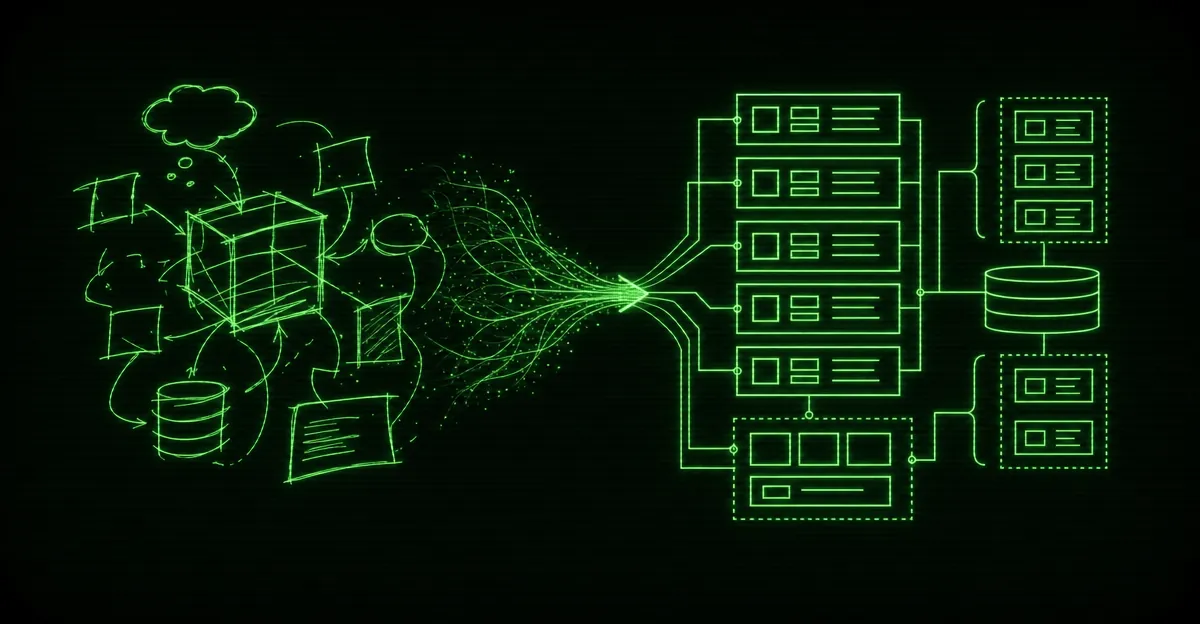
Real architecture. The first version works because it’s small. Add a second feature, then a third, and the thing AI generated turns into a pile of code that nobody — including the AI — can reason about anymore. There’s no plan underneath it. Every new request risks breaking three things you forgot existed. Architecture is the decision about how the pieces fit so that the tenth change is as easy as the first. Vibe coding doesn’t make that decision. It just keeps stacking.
Security. This is the scary one. Generated code will happily expose data it shouldn’t, trust input it shouldn’t, and leave doors open that you’ll never see because the page looks fine. The site renders, the form submits, everyone’s happy — until someone who isn’t a customer goes looking. You don’t find out your security was an illusion until the worst possible moment.
Edge cases. The demo works because you tested the one path you had in mind. Production is ten thousand people doing things you never imagined — the blank field, the emoji in the name, the double-click, the back button at exactly the wrong second. The last mile of software is almost entirely edge cases, and “describe what you want” describes the happy path. It does not describe everything that can go wrong, because you don’t know everything that can go wrong. That’s the job.
Performance. A site with three of your test records is fast. A site with three years of real data, real traffic, and real images can crawl — and the fix is rarely “ask the AI to make it faster.” It’s a structural problem that needed a structural answer before the first line got written.
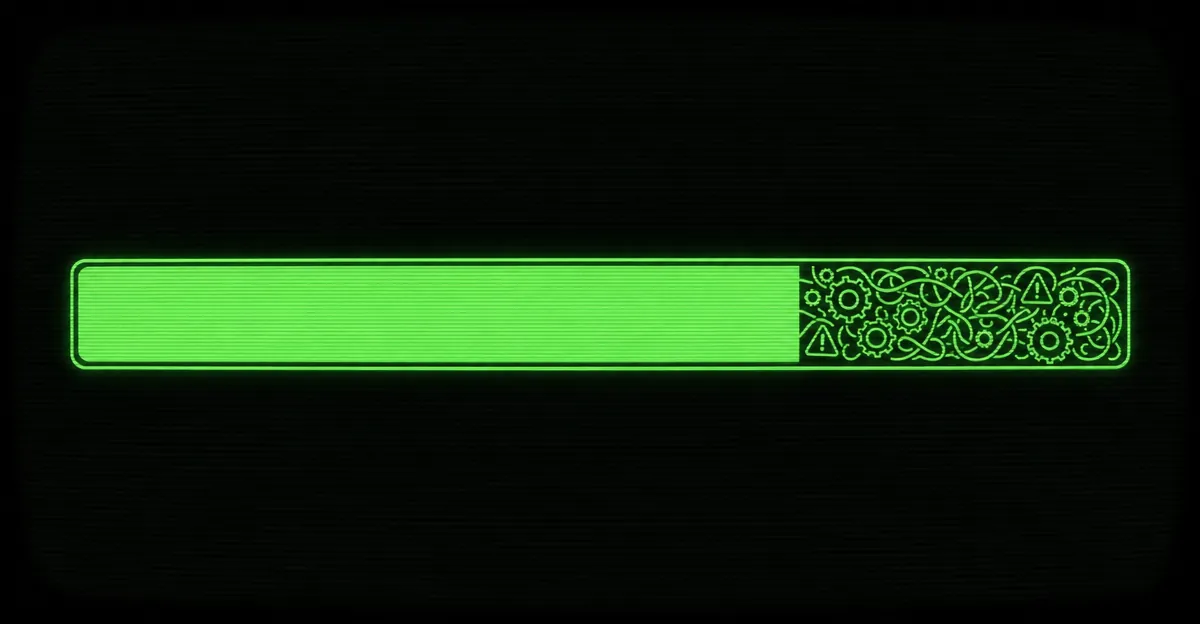
The unglamorous last 20%. Error handling. Accessibility. The thing that happens when the payment fails. Search engines that can actually read the page. What it looks like on a five-year-old phone. The backup when something breaks at 2am. None of it is fun. None of it demos well. All of it is the difference between a thing that looks done and a thing that is done.
That last 20% is where the entire job lives. It’s also exactly the part vibe coding skips, because it’s the part nobody thinks to ask for.
“An AI built my site in an afternoon” — let’s talk about that sentence
It might be true. The page probably loads. It might even look pretty good.
But “loads and looks good” is the easy 80%. It’s the part anyone can see. What you can’t see by looking is whether it’s secure, whether it survives real traffic, whether search engines can read it, whether it works on your customer’s phone, whether the contact form actually delivers, and what happens the day something breaks.
A website your business depends on isn’t a thing that appeared once. It’s a thing that holds up.
A demo proves the idea is possible. A production system proves it’s reliable. Those are different jobs, and only one of them keeps running when you’re asleep.
The afternoon site is a fantastic starting point. It is not a finished product, and treating it like one is how businesses end up with a thing that works great right up until the moment a real customer needs it to.
So what do you actually do with this
Use vibe coding. Seriously. For prototypes, for scripts, for getting an idea out of your head and onto a screen so you can decide if it’s worth building for real — it’s one of the best tools that’s ever existed. We use it constantly, internally, for exactly that.
But know the line. The moment something becomes a thing your business depends on — your storefront, your booking system, the place customers form their first impression of you — you’ve crossed out of the zone vibe coding handles alone and into the zone that needs someone who does the hard, durable, unglamorous part on purpose.
That’s the part we do. When we build a site, the demo isn’t the deliverable — it’s the first ten minutes. The other 80% is architecture that survives the second feature, security that holds when someone goes looking, edge cases handled before they happen, performance that doesn’t fall over under real load, and all the boring infrastructure that keeps it running long after launch day. Web development is the whole iceberg, not the tip you can see.
Vibe coding grew up. It’s a real tool and it earned its place. Just don’t confuse the part that’s easy to see with the part that keeps your business standing.
If you’ve got a demo you’re proud of and you want it to become a site you can actually depend on, that’s exactly the gap we close. See how we build for the long haul →